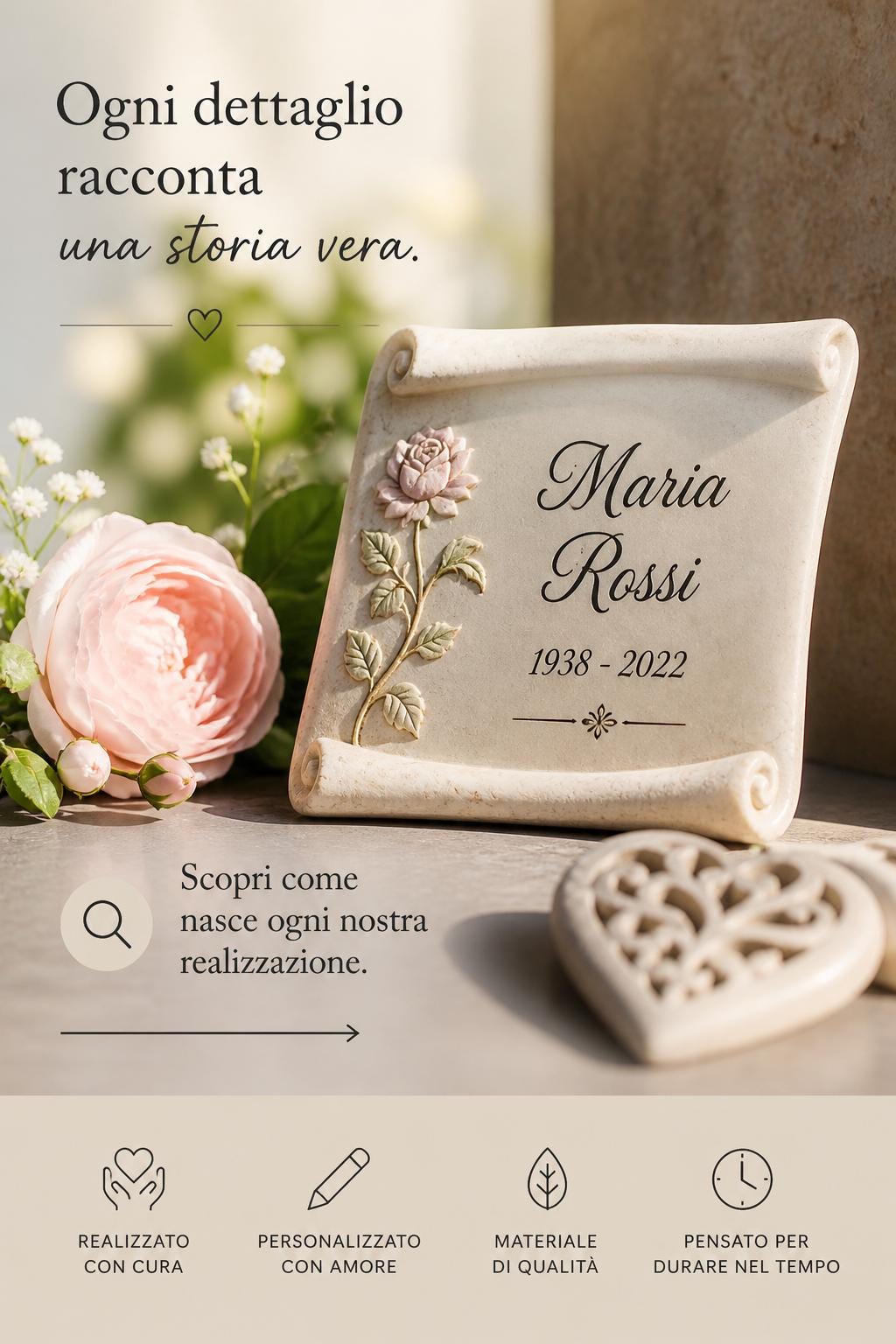
Sometimes remembrance begins with a name. Not a monument. Not an object. Just a name placed somewhere it can remain visible. In many families, the first gesture of memory is not complicated. It is simply the decision to give a name a place where it can stay. A small space in a garden. A corner of a cemetery. A wall that receives morning light. A place where presence becomes readable again. Keeping a name visible is not only about the past. It is about continuity. It allows memory to remain part of everyday space. Not hidden. Not distant. But quietly present. When a name is written in a place that belongs to daily life, remembrance changes meaning. It becomes something we live with. Something we pass near. Something we recognize again and again. This is why the simplest gestures often become the most lasting ones. Because they do not try to explain memory. They allow memory to stay. A name does not replace a presence. But it keeps a place for it.
A Name Can Be a Place That Stays