
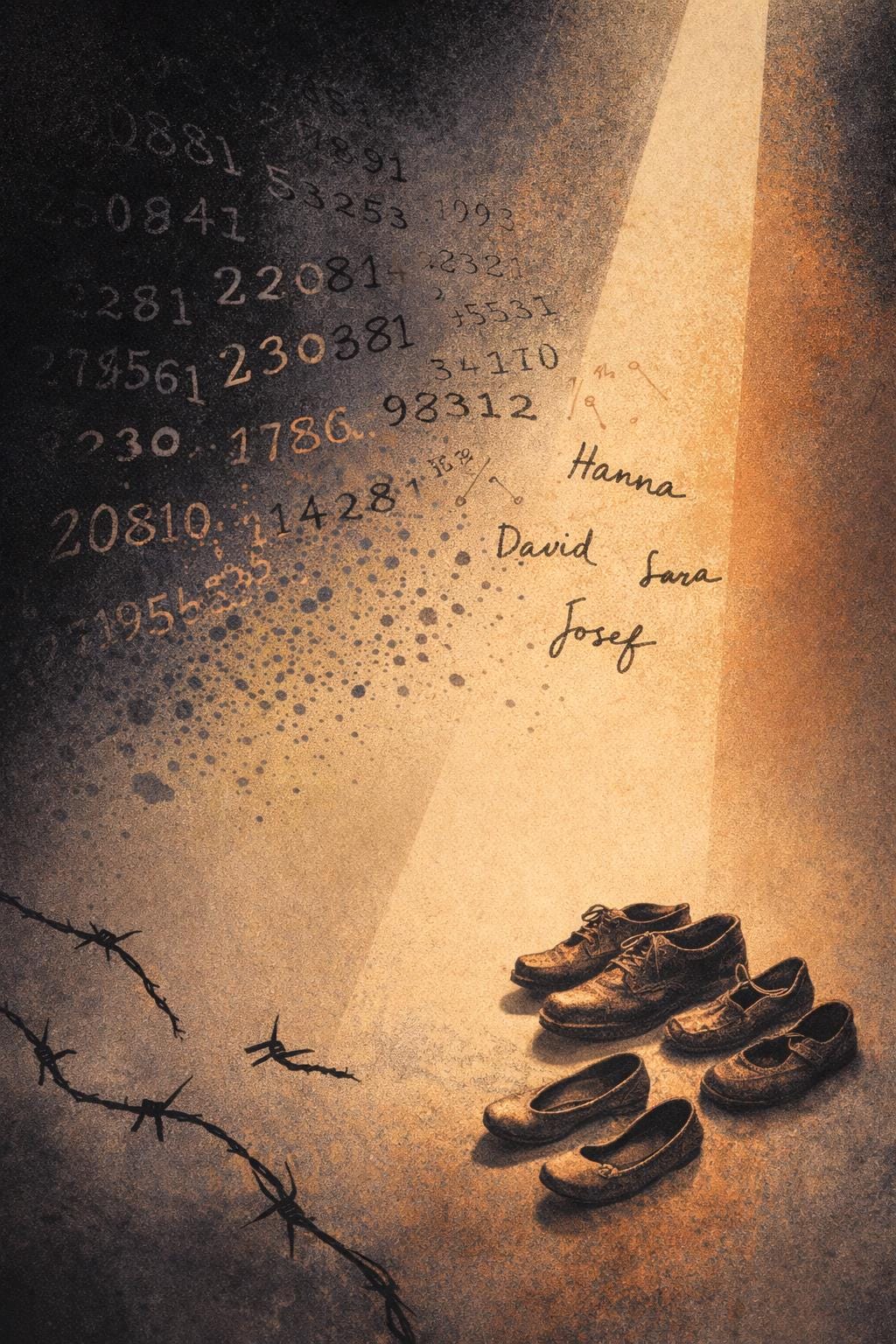
There are moments when memory is not a choice. It becomes a responsibility. The Holocaust did not begin with camps. It began when people were turned into categories, and names were slowly removed. A name is not just a word. It is orientation. It tells us who someone was, and that they existed as a person — not a number. On January 27, we remember millions of lives that were stripped of their names, their faces, their stories. Erased not only from the present, but from the future that could have been. Memory is fragile. It does not survive on its own. It needs to be kept. To keep memory does not mean to repeat facts. It means to refuse disappearance. It means holding space for what someone tried to erase. Some absences are so vast that they shape everything that comes after them. Remembering is not about looking back. It is about keeping the present honest. Because what is forgotten, disappears again. And what is remembered, stays.
KEEP is a space for memory, permanence, and what stays.