
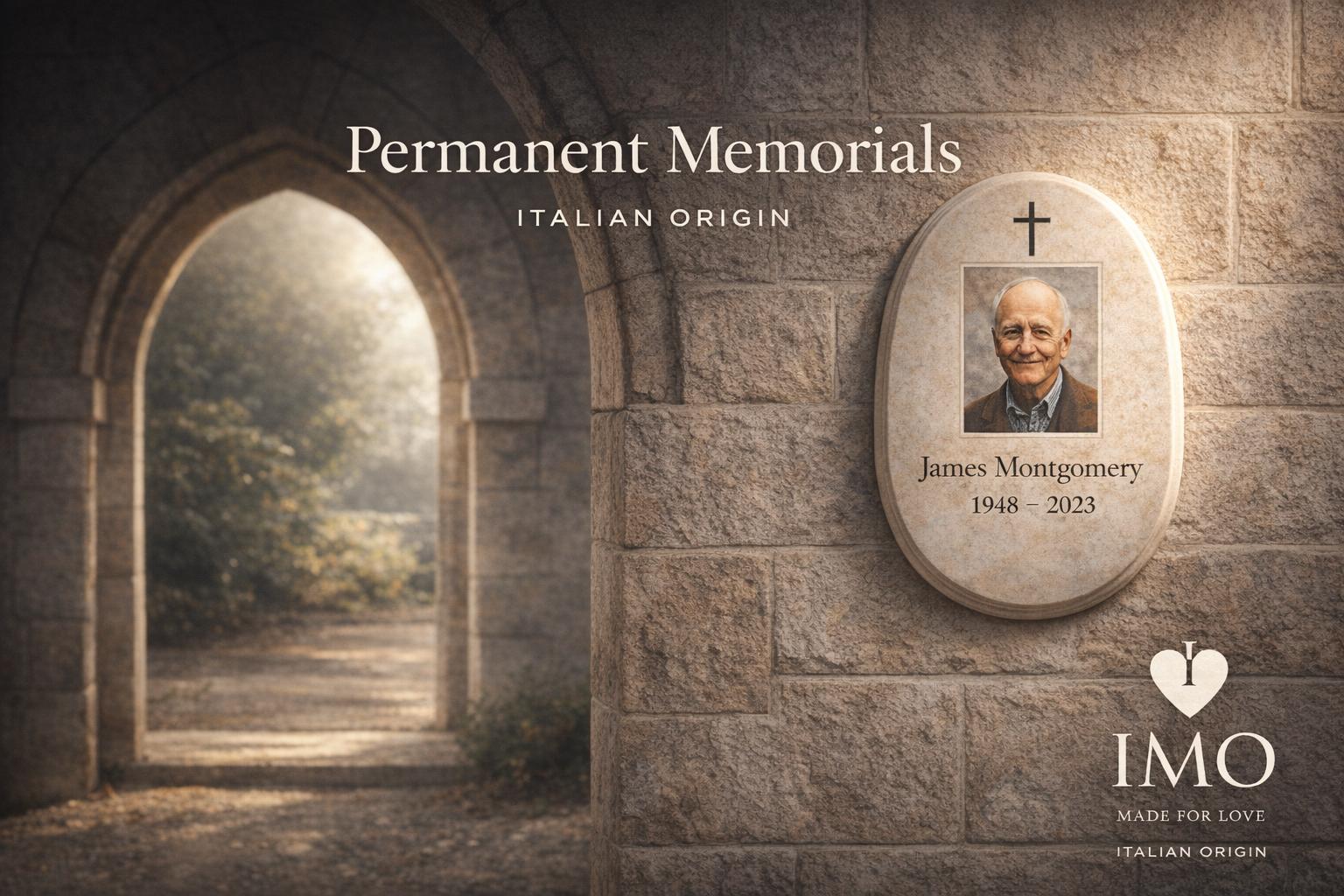
When the ritual is over, memory continues.
IMO works on memory, not on urgency. We offer a structured approach to remembrance designed for the time after — when choices can be made with clarity, distance, and intention. This page exists to explain how IMO works, and why our approach is different.
What IMO is
A memorial design structure
IMO is not focused on the moment of loss. Our work begins later, when memory starts to ask different questions:
- Where does remembrance belong now?
- How can it be shared, relocated, or restored?
- How can memory take a form that feels right over time?
IMO operates as a service-based memorial design structure, offering orientation, systems, and designed forms to support these decisions.
What IMO does not do
Not for urgency. Not for the ritual.
IMO does not work on:
- emergency decisions
- funeral arrangements
- time-sensitive choices
Our role is not to replace the ritual, but to support what comes after — when memory needs order, proportion, and continuity.
How the IMO system works
Memory is not an object. It is a system.
Over time, remembrance changes:
- scale — from public to private
- place — from cemetery to home, or between people
- form — from monument to symbol
IMO works through connected elements, not isolated products. Each element is part of a broader system that allows memory to evolve without losing coherence. This includes:
- primary and secondary remembrance
- shared and personal memory forms
- restoration and reconfiguration of existing memorials
- domestic, symbolic, and permanent solutions
Each object is a pedina within this system — not the answer, but part of it.
When IMO can be useful
This space may be useful if:
- time has passed and something no longer feels right
- memory is shared between people or places
- an existing memorial needs to be rethought or restored
- there is no single place for remembrance
- choices are being made calmly, not urgently
If this resonates, you are in the right place.
About the objects
Objects as tools, not as answers
The forms offered by IMO — urns, images, pendants, ceramic elements — are not meant to solve memory on their own. They exist to:
- support orientation
- give form to decisions
- maintain coherence over time
The value lies in how they are used, not in the object itself.
Stay connected
This blog and our channels exist to explore memory, time, and form — without urgency and without pressure. You can:
- follow IMO to understand how remembrance evolves
- explore our approach through articles and reflections
- share this page with someone who may need it, now or later
Memory does not ask for speed. It asks for the right moment.