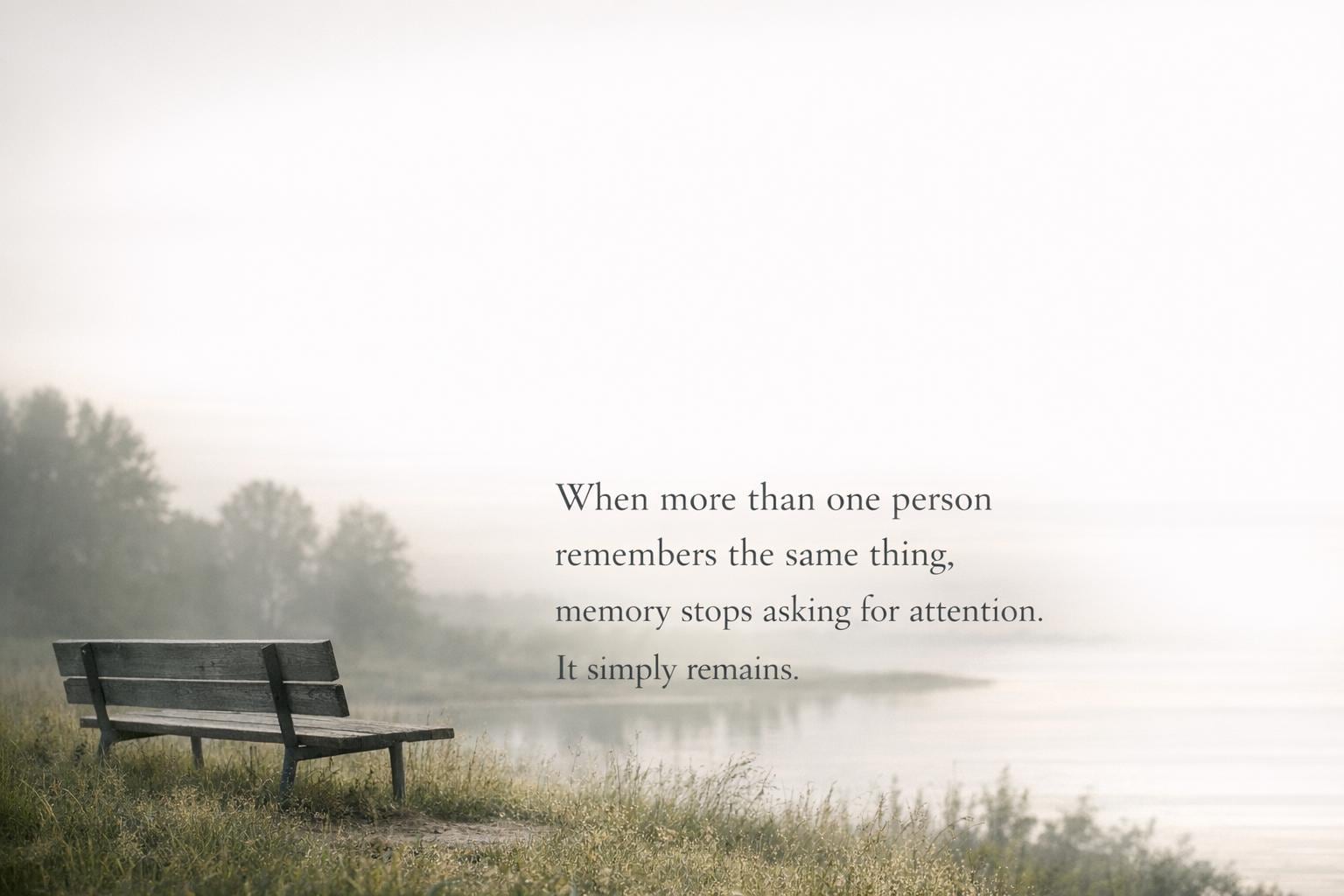
There are memories that do not belong to anyone in particular. Not because they are vague, but because they have been held together. A private memory depends on a single voice. A shared memory survives because it passes from one person to another. When more than one person remembers the same thing, memory stops asking for attention. It no longer needs to be explained, defended, or recalled on purpose. It simply remains. Shared memory is not built in moments of urgency. It forms later, when repetition replaces emotion and continuity replaces intensity. Names are spoken without introduction. Dates no longer require explanation. Places hold meaning even when no one is actively remembering them. At that point, memory stops being personal. It becomes a system. A shared memory does not rely on feeling. It relies on agreement—often silent—that something matters enough to stay in place. This is why shared memory does not comfort. Comfort belongs to the moment. Shared memory belongs to time. It is what remains when no one is speaking. When no one is explaining. When no one is trying to remember. Some memories endure not because they are protected, but because they have been shared long enough to become stable.
Shared memory